
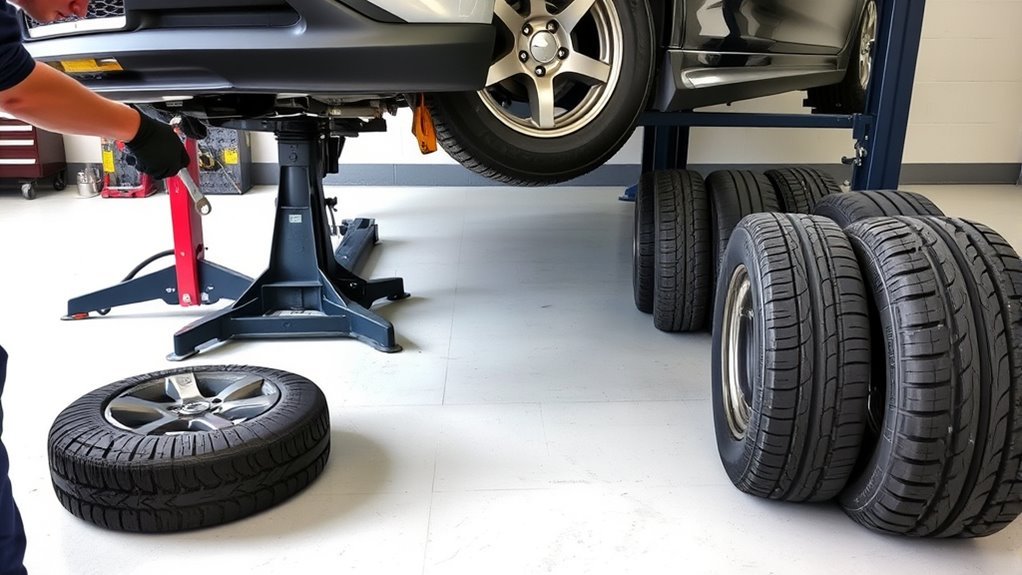
How to Rotate Tires on a Car: FWD, RWD, AWD, Directional, and Staggered Patterns
Tire rotation is essential to ensure even wear and extend the life of your tires. The rotation pattern depends on your car’s drivetrain and the type of tires you have. Using the correct method helps maintain balanced handling and improves safety.
For front-wheel drive (FWD) cars, the forward cross or X-pattern is common.
Rear-wheel drive (RWD) vehicles typically use a rearward cross pattern.
All-wheel drive (AWD) cars often require an X-pattern or front-to-back swaps when tires are the same size.
Directional tires must rotate front to rear on the same side to keep their tread direction.
Staggered setups, where front and rear tires differ in size, need side-to-side swaps on each axle.
Knowing these patterns helps you rotate tires correctly and get the most from them.
When to Rotate Your Tires
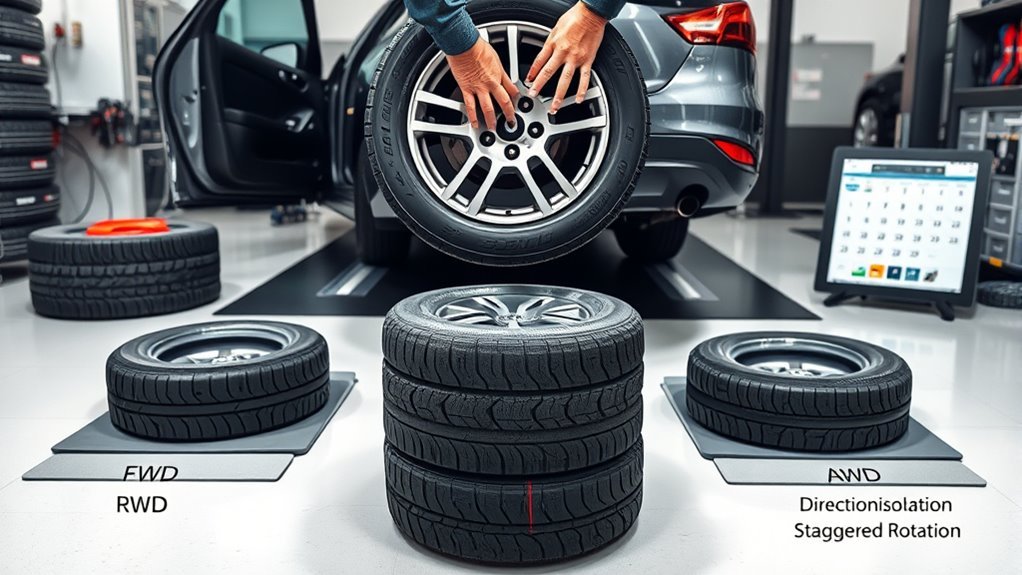
Tire rotation should occur every 5,000 to 7,500 miles to ensure even tread wear and extend tire life. The exact timing depends on your vehicle type, tire design, and driving conditions. Regular rotation balances wear caused by weight distribution and drivetrain forces.
Rotate tires every 5,000 to 7,500 miles to promote even wear and extend tire life.
Manufacturers recommend rotation intervals specific to vehicle models and tire types. Consulting your owner’s manual or tire documentation provides the best guidance for your tires.
Skipping rotations can cause uneven tread wear and may lead to early tire replacement. Monitoring tread depth during routine maintenance helps decide if rotation is needed sooner.
Key points for tire rotation timing:
- Follow manufacturer guidelines for mileage intervals.
- Rotate tires more frequently if driving conditions are harsh (off-road, heavy loads, frequent braking).
- Inspect tread and tire condition regularly.
- Maintain a consistent rotation schedule for optimal tire performance and safety.
Regular tire rotation improves tire lifespan, vehicle handling, and safety while reducing replacement costs.
Tire Rotation Patterns for Front-Wheel Drive Cars
Front-wheel drive cars require specific tire rotation patterns to ensure even wear, as the front tires handle most weight and power delivery. The forward cross pattern is the most common method, which redistributes tire positions to balance wear. The X-pattern is another effective option for maintaining tread life.
Front-wheel drive cars place more load and power on the front tires. The forward cross pattern moves the front tires straight back on the same side. The rear tires move to the front but swap sides. This rotation equalizes wear by shifting the heavily used front tires to the rear.
The X-pattern rotation moves all tires diagonally:
- Front left tire moves to rear right
- Front right tire moves to rear left
- Rear left tire moves to front right
- Rear right tire moves to front left
Both patterns help extend tire life and maintain even tread wear. Regular rotation improves handling and safety by ensuring balanced tire performance on front-wheel drive vehicles.
Tire Rotation Methods for Rear- and All-Wheel Drive
Rear- and all-wheel drive vehicles need specific tire rotation methods due to their power distribution and tire wear patterns. Rear-wheel drive (RWD) tires wear more on the rear wheels. All-wheel drive (AWD) systems distribute power to all wheels, requiring balanced rotations to maintain tire life.
Rear- and all-wheel drive vehicles require tailored tire rotation methods to address unique power and wear patterns.
Rear-wheel drive rotation uses the Rearward Cross method. Move the rear tires straight to the front. Cross the front tires diagonally to the rear. This pattern helps balance the higher wear on the rear tires.
All-wheel drive vehicles use different methods based on tire setup:
- X-Pattern Rotation (AWD): Cross all four tires diagonally. This distributes wear evenly across all tires.
- Front-to-Rear Rotation (AWD): Swap front tires directly with rear tires on the same side. This works when tires are the same size.
- Side-to-Side Rotation (Staggered Tires): Swap tires from one side to the other when front and rear tires differ in size.
Choosing the right rotation method ensures even wear, improves traction, and extends tire life. Always follow the vehicle manufacturer’s recommendations for tire rotation intervals and patterns.
How to Rotate Directional Tires Correctly
Directional tires feature a tread pattern designed to perform best when rotating in a specific direction. Proper rotation patterns for these tires must maintain the original orientation to avoid compromising performance and safety. Ensuring the correct tire orientation is essential when rotating directional tires.
Understanding Directional Tire Design
Directional tires have a tread pattern designed to rotate in one specific direction. This design improves traction and water removal on wet roads. Proper identification and handling of directional tires are crucial to maintain safety and extend tire life.
Directional tire tread patterns are typically V-shaped or arrow-like. These patterns point in the intended rolling direction. The sidewall of directional tires includes markings that indicate the correct direction of rotation.
Directional tread design enhances performance in wet conditions by channeling water away from the contact patch. This reduces the risk of hydroplaning and improves grip on wet surfaces.
Rotation methods for directional tires are limited. Tires must rotate forward in the marked direction to avoid uneven wear and possible tire damage. Cross-rotating these tires is not recommended.
Key features of directional tire design:
- V-shaped or arrow-like tread pattern
- Sidewall markings showing rotation direction
- Improved water evacuation for wet traction
- Rotation restrictions to maintain proper wear
Recognizing these features ensures correct tire rotation and helps maintain vehicle safety and tire durability.
Rotation Patterns for Directional Tires
Directional tires have a specific tread pattern designed to rotate in one direction. To maintain performance and tread wear, rotate these tires front to back on the same side of the vehicle only. Avoid crossing tires between sides to keep the tread direction intact.
Directional tire rotation differs from non-directional tire rotation. Non-directional tires can be rotated in various patterns, including side-to-side or cross patterns. Directional tires require a simpler pattern because their tread shape channels water and enhances grip when rotating correctly.
Follow this rotation pattern for directional tires:
| Current Position | New Position |
|---|---|
| Front Left | Rear Left |
| Rear Left | Front Left |
| Front Right | Rear Right |
| Rear Right | Front Right |
This pattern keeps the tread facing the same direction on each side. Maintaining the correct tread orientation ensures consistent traction, improves handling, and extends tire life.
Maintaining Proper Tire Orientation
Proper tire orientation is essential for directional tires to maintain traction, safety, and tire life. Directional tires have tread patterns designed to work when rotating in one direction only. Correct rotation preserves their water-channeling and grip capabilities.
Directional tires require specific rotation steps:
- Remove tires from their current positions.
- Reinstall each tire on the same side of the vehicle to keep the original tread direction.
- Swap the front tire with the rear tire on the same side to promote even wear.
- Avoid moving tires across sides, as this reverses the tread direction and reduces performance.
Following these steps ensures directional tires perform as intended and last longer.
Tire Rotation for Staggered Tire Setups
Tire rotation for staggered setups involves rotating tires side to side on the same axle because front and rear tires differ in size. This method promotes even wear within each axle while maintaining proper fit and safety. Staggered tires cannot be rotated front to rear due to size differences.
Staggered tire setups have different widths or diameters on the front and rear axles. The size difference prevents tires from being interchanged between axles. Rotating tires across axles can cause handling issues and safety risks.
Rotation options for staggered tires include:
- Swapping left and right tires on the front axle
- Swapping left and right tires on the rear axle
This side-to-side rotation balances wear patterns on each axle without mixing tire sizes.
Maintaining correct tire pressure and wheel alignment is essential for maximizing the life of staggered tires. Proper inflation and alignment help prevent uneven wear and preserve handling performance.
Tire Rotation Tips and Common Mistakes to Avoid
Tire rotation moves tires from one position to another to promote even wear and extend tire life. Following proper procedures helps maintain vehicle safety and handling. Ignoring manufacturer guidelines or tire types can cause uneven wear and driving problems.
Understanding your vehicle’s drivetrain and tire type is essential before choosing a rotation pattern. Different drivetrains (front-wheel, rear-wheel, all-wheel) require specific rotation methods. Directional tires and staggered setups need special handling to avoid damage.
Maintain tire pressure before and after rotation. Consistent pressure ensures proper contact with the road and even wear. Check the tires for cuts, punctures, or uneven tread wear during rotation intervals to catch potential issues early.
Follow the recommended rotation schedule, usually every 5,000 to 8,000 miles. Regular rotation balances tire wear and improves handling.
Common mistakes in tire rotation include:
- Mixing directional tires incorrectly (rotating them against their designed direction).
- Swapping tires across staggered setups without matching size and specifications.
- Ignoring manufacturer rotation patterns or intervals.
- Failing to check tire pressure or condition before rotation.
Summary of tire rotation best practices:
| Step | Action |
|---|---|
| 1. Identify drivetrain & tire | Confirm vehicle type and tire specifications. |
| 2. Select rotation pattern | Use appropriate pattern for drivetrain and tire type. |
| 3. Check tire pressure | Inflate to recommended levels before and after rotation. |
| 4. Inspect tires | Look for damage or uneven wear during rotation. |
| 5. Rotate on schedule | Perform rotation every 5,000 to 8,000 miles. |
Following these guidelines extends tire life, keeps handling balanced, and supports vehicle safety.
Frequently Asked Questions
How Does Tire Rotation Affect Fuel Efficiency?
How does tire rotation affect fuel efficiency?
Tire rotation improves fuel efficiency by ensuring even tire wear, which lowers rolling resistance. Evenly worn tires require less energy to maintain traction, reducing fuel consumption. Regular rotation keeps tread depth uniform, enhancing driving smoothness and engine performance, leading to better fuel economy and longer tire life.
Can Tire Rotation Improve Vehicle Handling?
Can tire rotation improve vehicle handling?
Yes, tire rotation promotes even tread wear, ensuring consistent traction and better stability, cornering, and braking. It prevents uneven wear that can cause pulling or vibrations, maintaining optimal tire performance and safer vehicle dynamics. The level of improvement varies based on the vehicle and driving conditions.
Should Tire Pressure Be Checked During Rotation?
Should tire pressure be checked during rotation?
Yes, tire pressure should be checked during rotation to prevent uneven wear, improve fuel efficiency, and ensure safety. Regular checks help detect slow leaks or damage early, avoiding costly repairs and accidents.
How Do Uneven Tire Wear Patterns Develop?
Uneven tire wear patterns develop mainly from improper wheel alignment, unbalanced tires, or suspension problems. Aggressive driving habits like hard braking and sharp cornering also contribute. Inconsistent tire pressure and neglecting regular tire rotation cause uneven wear. Additionally, road conditions and uneven vehicle load distribution affect tire wear, leading to premature degradation and reduced performance if not addressed promptly.
Are Tire Rotation Services Covered by Warranty?
Are tire rotation services covered by warranty?
Tire rotation services are usually not covered by standard vehicle warranties because they are considered routine maintenance, not repairs. However, some tire manufacturers may include rotation in their tire warranty programs. Always check the specific warranty terms for details.