How to Repair a Dead Car Battery: Test, Recharge, Jump-Start, or Replace?
A dead car battery can stop your vehicle from starting and cause frustration. Knowing how to diagnose and handle a dead battery can save time and money.
The first step is to test the battery’s voltage with a multimeter. Look for signs like slow engine cranking or dim headlights, which often indicate a weak battery.
If the battery is undercharged, you can recharge it safely. Use a suitable charger and work in a well-ventilated area to avoid harmful fumes.
If the battery is completely dead, jump-starting the car might be necessary. Make sure to connect the cables correctly and ground the connection to prevent sparks and damage.
Sometimes testing and recharging do not work. In that case, replacing the battery is the only option.
Choose a new battery that matches your vehicle’s specifications. Proper installation and regular maintenance will help extend the battery’s life and keep your car running smoothly.
How to Spot a Dead Car Battery Fast
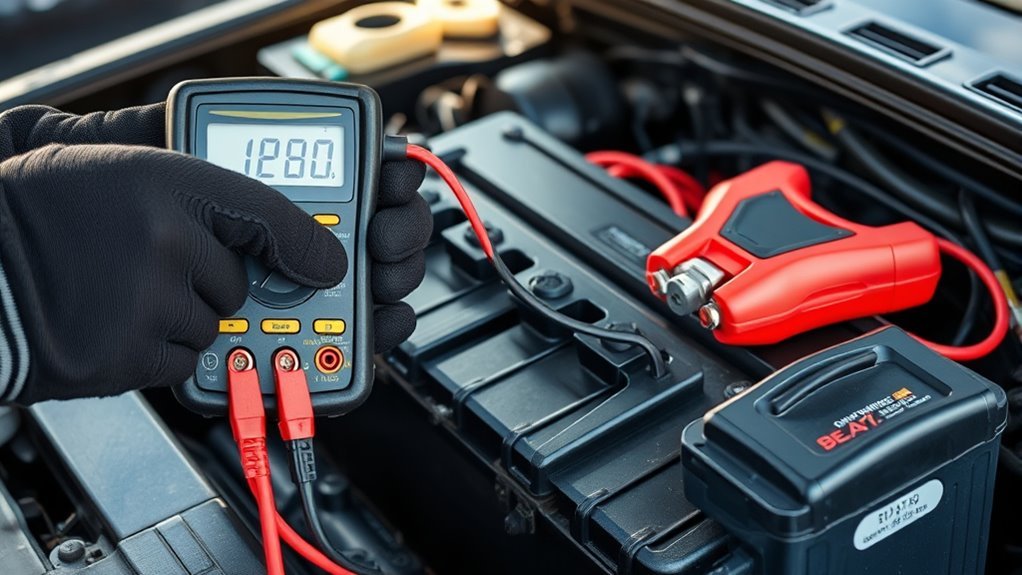
A dead car battery prevents the engine from starting and disrupts electrical systems. Key signs include slow engine cranking, dim lights, and dashboard warning indicators. Spotting these symptoms early helps avoid being stranded and allows for timely battery testing or replacement.
A dead battery stops your car from starting and dims electrical systems—early signs help prevent getting stranded.
Common signs of a dead battery include:
- Slow or sluggish engine crank when turning the key or pressing the start button.
- Dim headlights and interior lights that appear weaker than usual.
- Electrical components like the radio, power windows, or door locks working inconsistently or failing.
- Dashboard warning lights, especially the battery or charging system indicator, lighting up.
- Corrosion buildup or leakage around battery terminals, which can indicate battery failure.
Checking the battery terminals for corrosion is important. Corrosion appears as a white, ashy deposit around the posts and can impair electrical contact. Leakage or swelling of the battery case also signals a problem.
Recognizing these symptoms quickly allows for prompt battery testing using a multimeter or load tester. Early detection helps avoid sudden vehicle failure and ensures you can replace or recharge the battery before it causes major issues.
What Tools You’ll Need to Test Your Battery
Testing a car battery requires specific tools to guarantee accurate diagnosis. A multimeter is essential for measuring voltage and evaluating battery health. Additionally, safety equipment is necessary to protect against potential hazards during testing.
Essential Battery Testing Tools
Essential tools for evaluating a car battery include a hydrometer, a battery load tester, and a voltmeter. These instruments measure different aspects of battery health, allowing accurate diagnosis of charge level, performance under load, and voltage condition.
A hydrometer tests the specific gravity of the battery electrolyte. This measurement indicates the battery’s charge state and overall health. Low specific gravity values suggest a discharged or failing battery.
A battery load tester applies a controlled electrical load to the battery. It evaluates how well the battery performs under stress, revealing weaknesses that voltage readings alone cannot detect.
A voltmeter measures the battery’s voltage. This tool provides a quick check for obvious electrical problems, such as a dead or weak battery.
| Tool | Purpose |
|---|---|
| Hydrometer | Measures electrolyte specific gravity |
| Battery Load Tester | Tests battery performance under load |
| Voltmeter | Measures battery voltage level |
Using all three tools together ensures a complete and accurate assessment. This approach helps decide whether to recharge or replace the battery without guesswork.
Multimeter Usage Basics
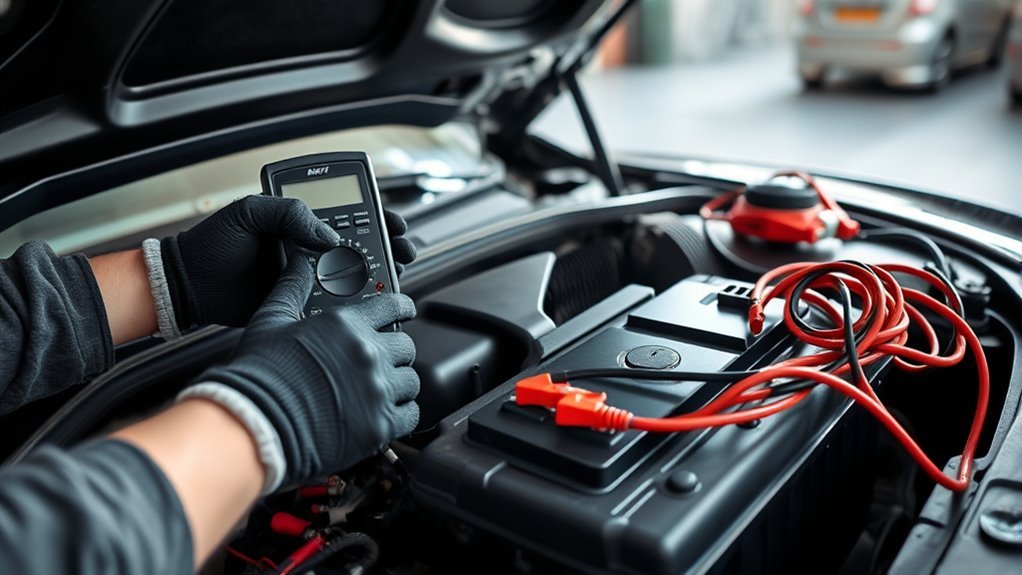
A multimeter measures a car battery’s voltage to indicate its charge level and health. It helps quickly identify if the battery is charged, discharged, or faulty. Using a multimeter can distinguish battery issues from other electrical problems, guiding decisions on recharging or replacing the battery.
To test a car battery with a multimeter:
- Set the multimeter to DC voltage, usually 20V for a 12-volt battery.
- Connect the red probe to the battery’s positive terminal.
- Connect the black probe to the negative terminal.
- Read the voltage displayed.
A fully charged battery typically shows about 12.6 volts or higher with the engine off. Readings below 12.4 volts suggest the battery is partially discharged. If the voltage is significantly lower, the battery may be faulty or dead.
Using a multimeter is essential for accurate battery testing. It saves time by confirming the battery’s condition before attempting repairs or replacement. Its portability and ease of use make it a common tool for mechanics and car owners.
Safety Equipment Required
Proper safety equipment protects against electrical hazards and acid exposure during battery testing. Essential gear includes safety goggles, chemical-resistant gloves, protective clothing, insulated tools, and a fire extinguisher for electrical fires. A ventilated workspace and appropriate footwear further reduce risks.
Safety goggles shield eyes from acid splashes and sparks. Chemical-resistant gloves prevent skin contact with corrosive battery acid. Wearing a long-sleeved shirt and sturdy pants limits skin exposure to harmful chemicals.
A well-ventilated area reduces the risk of inhaling gases released by faulty batteries. Insulated tools and a multimeter with protective casing reduce the chance of electric shocks during testing.
A fire extinguisher rated for electrical fires should be nearby in case of emergencies. Rubber-soled shoes or other non-conductive footwear help prevent electrical conduction through the body.
Summary of essential safety equipment for battery testing:
- Safety goggles
- Chemical-resistant gloves
- Long-sleeved shirt and sturdy pants
- Well-ventilated workspace
- Insulated tools and protective multimeter
- Fire extinguisher rated for electrical fires
- Rubber-soled footwear
Following these precautions ensures a safe environment while handling and testing car batteries.
How to Test Your Battery’s Voltage and Health
Testing a battery’s voltage and health reveals its actual condition beyond visible inspection. A digital multimeter measures voltage to indicate charge level. A load test checks if the battery maintains voltage under stress, exposing internal problems.
Use a digital multimeter to test battery voltage:
- Connect the red lead to the positive terminal.
- Connect the black lead to the negative terminal.
- Read the voltage displayed.
A fully charged battery usually shows 12.6 volts or higher. Lower readings indicate discharge or potential failure.
Battery voltage and status guide:
| Voltage Reading (Volts) | Battery Status |
|---|---|
| 12.6 or above | Fully charged, healthy |
| 12.4 to 12.6 | Moderately charged |
| Below 12.4 | Discharged or faulty |
Performing a load test applies a controlled drain on the battery while measuring voltage. If voltage drops significantly, the battery may have internal damage or reduced capacity.
Regular voltage and load testing help decide when to recharge or replace the battery.
How to Jump-Start Your Dead Battery Safely
Jump-starting a dead battery provides a temporary power boost to start a vehicle when the battery cannot hold enough charge. The process requires careful connection of jumper cables between the dead battery and a donor battery to transfer electrical power safely.
Follow these steps to jump-start a battery safely:
- Park both vehicles close but ensure they do not touch. Turn off both engines.
- Connect the red (positive) jumper cable clamp to the positive terminal of the dead battery.
- Attach the other end of the red cable to the positive terminal of the donor battery.
- Connect the black (negative) jumper cable clamp to the negative terminal of the donor battery.
- Attach the other end of the black cable to an unpainted metal surface on the dead vehicle’s engine block, away from the battery.
- Start the donor vehicle and let it run for several minutes to charge the dead battery.
- Attempt to start the dead vehicle.
- Once the dead vehicle starts, disconnect the cables in reverse order: first the black cable from the engine block, then from the donor battery, followed by the red cable from the donor battery, and finally from the dead battery.
Avoid connecting the black cable directly to the dead battery’s negative terminal to reduce the risk of sparks and battery damage. Always use clean, solid metal contact points for grounding. This method helps prevent electrical hazards and protects vehicle electronics.
How to Recharge Your Car Battery Effectively
Selecting an appropriate charger is crucial for efficiently restoring a dead car battery. Proper charging techniques help guarantee safety and extend battery life. Understanding these factors can greatly improve the recharging process.
Choosing The Right Charger
Choosing the right charger depends on your car battery type, capacity, and desired charging speed. Different chargers suit different batteries and needs. Matching these factors ensures safe and effective battery revival.
Standard chargers supply a steady current. They work well for most lead-acid batteries. Smart chargers adjust the current automatically. They prevent overcharging and protect battery life.
Deep-cycle and AGM batteries require chargers made for their chemistry. These chargers optimize battery health and performance.
Charger amperage affects charging time. Lower amperage chargers deliver slower, gentler charging. Higher amperage chargers charge faster but risk battery damage if not controlled.
Most car batteries use 12 volts. Chargers must match the battery voltage for compatibility.
Additional charger features can improve the process. Portability helps if you need to move the charger. Diagnostic functions assist in identifying battery issues.
Summary table:
| Factor | Recommendation |
|---|---|
| Battery Type | Use charger designed for battery chemistry (lead-acid, AGM etc.) |
| Charger Type | Standard for steady current, smart for regulated charging |
| Amperage | Low amperage for gentle charging, high amperage for speed |
| Voltage Compatibility | Match charger voltage to battery voltage (usually 12V) |
| Extra Features | Portability, diagnostics |
Selecting a charger based on these criteria ensures effective, safe battery charging.
Safe Charging Practices
Following safe charging practices is essential for reviving a dead car battery because it prevents damage, avoids accidents, and extends battery life. Proper procedures ensure energy transfers efficiently while reducing risks such as sparks, overheating, or acid leaks.
Safe charging starts with using the correct charger type for the battery. Chargers must match the battery’s voltage and chemistry to avoid harm.
Charging in a well-ventilated area prevents the buildup of hydrogen gas, which can cause explosions. Open spaces or garages with airflow are best.
Connecting terminals properly is crucial. Always attach the positive clamp to the battery’s positive terminal and the negative clamp to the negative terminal to prevent short circuits.
Monitoring the charging process helps avoid overcharging and overheating. Use recommended charging times and check the battery regularly.
| Practice | Description |
|---|---|
| Use Correct Charger Type | Select charger that matches battery specs |
| Charge in Ventilated Area | Ensure airflow to prevent gas accumulation |
| Connect Terminals Properly | Attach positive to positive, negative to negative |
| Monitor Charging Process | Watch for overcharge, overheating, and timing |
Following these steps ensures safe, effective recharging and improves the battery’s lifespan.
When to Replace Your Car Battery: Key Signs
Car batteries need replacement when they show signs of failure or age-related decline. Key indicators include starting difficulties, dim lights, corrosion, visible damage, and failing diagnostic tests. Batteries older than three to five years often require proactive replacement to avoid breakdowns.
Frequent engine starting problems suggest the battery is weakening. If the engine struggles to turn over or takes longer to start, the battery may not hold enough charge. Dim headlights or other electrical malfunctions also point to insufficient battery power.
Corrosion on battery terminals reduces electrical contact and can cause starting issues. Visible damage such as cracks or swelling in the battery case signals internal failure and decreases battery efficiency. These physical signs require prompt attention.
A battery that repeatedly fails load or voltage tests is unreliable. Diagnostic tests measure the battery’s ability to hold and deliver charge. Failure despite proper charging means replacement is necessary to maintain vehicle performance.
Age reduces battery capacity and reliability. Most car batteries last between three and five years. Beyond this period, the risk of sudden failure increases. Replacing the battery proactively prevents being stranded and protects other electrical components.
Summary of key replacement indicators:
- Difficulty starting the engine
- Dim or flickering headlights
- Corrosion buildup on terminals
- Physical damage or swelling of the battery case
- Failing load or voltage tests
- Battery age over three to five years
Recognizing these signs helps maintain vehicle reliability and safety by ensuring the battery is replaced before a breakdown occurs.
How to Choose the Right Replacement Battery
Choosing the right replacement battery means matching key specifications to your vehicle’s needs. The battery must fit physically, meet voltage requirements, provide sufficient starting power, and offer reliable backup capacity. Checking the vehicle manual and warranty terms ensures the battery performs well and lasts.
Battery group size determines the battery’s physical dimensions and terminal layout. Using the correct group size ensures the battery fits securely and connects properly without modifications.
Most car batteries operate at 12 volts. Confirming the voltage prevents electrical system problems caused by incompatible batteries.
Cold Cranking Amps (CCA) measures the battery’s ability to start the engine in cold weather. Choose a battery with CCA ratings that suit your local climate to ensure reliable starts in low temperatures.
Reserve Capacity (RC) indicates how long the battery can supply power if the alternator fails. Higher RC values offer longer power support during electrical system failures.
Warranty coverage provides consumer protection and reflects manufacturer confidence. Selecting a battery with a clear, adequate warranty helps avoid unexpected costs.
Summary table for key factors:
| Factor | What to Check | Why It Matters |
|---|---|---|
| Group Size | Match vehicle specifications | Ensures proper fit and terminals |
| Voltage | Confirm 12 volts | Prevents electrical issues |
| Cold Cranking Amps | Suitable for local cold temperatures | Guarantees engine start in cold |
| Reserve Capacity | Higher RC for longer backup power | Maintains power if alternator fails |
| Warranty | Clear terms and duration | Protects investment |
Consult your vehicle’s manual and manufacturer recommendations before purchasing to select a compatible battery that meets electrical demands.
How to Remove and Install Your Car Battery
Removing and installing a car battery requires safety precautions and the correct order of connections. Disconnect the negative terminal first and reconnect it last to avoid electrical risks. Secure the battery properly to ensure vehicle operation and safety.
Step 1: Prepare the vehicle
- Turn off the engine and remove the keys from the ignition.
- Locate the battery under the hood.
- Identify the negative (-) and positive (+) terminals.
Step 2: Disconnect the old battery
- Use a wrench to loosen the nut on the negative terminal.
- Remove the negative cable first to prevent short circuits.
- Loosen and remove the positive terminal cable next.
- Remove any brackets or clamps holding the battery in place.
- Carefully lift the battery out, as it can be heavy.
Step 3: Install the new battery
- Place the new battery in the tray, aligning terminals correctly.
- Secure the battery with the bracket or clamp.
- Connect the positive terminal cable first and tighten the nut.
- Connect the negative terminal cable last and tighten the nut.
- Check that both terminals are secure and free of corrosion.
Step 4: Final checks
- Confirm the battery is firmly held in place.
- Close the hood and start the vehicle to test the installation.
Following this order prevents electrical damage and ensures the battery functions properly.
How to Maintain Your Car Battery for Longevity
Proper car battery maintenance extends its lifespan and ensures dependable performance. Regular checks for corrosion, damage, and leaks prevent sudden failures. Cleaning terminals maintains good electrical contact. Securing the battery limits vibrations. Monitoring fluid levels in non-sealed batteries avoids damage. Avoiding frequent short trips helps keep the battery charged. Reducing electrical use when the engine is off prevents deep discharge. Storing the vehicle in a cool, dry place protects the battery from temperature damage.
How to Maintain Your Car Battery
Inspect the battery regularly
Check the battery case for cracks, leaks, or corrosion on the terminals. Corrosion appears as white or green powder. Early detection prevents failure and improves safety.
Clean terminals and connectors
Use a mixture of baking soda and water to clean battery terminals and cable connectors. This removes corrosion and ensures a strong electrical connection.
Secure the battery firmly
Keep the battery tightly mounted in its tray to reduce vibrations. Vibrations can damage internal components and shorten battery life.
Monitor fluid levels in non-sealed batteries
Check electrolyte levels monthly. Add distilled water if levels are low. Avoid using tap water, which may cause deposits and corrosion.
Avoid frequent short trips
Short drives do not allow the alternator enough time to recharge the battery fully. Plan longer trips to maintain charge.
Minimize electrical loads when the engine is off
Turn off lights, radios, and other electrical devices before shutting off the engine. This prevents deep battery discharge that reduces lifespan.
Store your vehicle properly
Park in a cool, dry location away from extreme heat or cold. Temperature extremes accelerate battery deterioration.
Summary Table: Car Battery Maintenance Practices
| Maintenance Task | Purpose | Frequency |
|---|---|---|
| Inspect for corrosion and damage | Prevent failure and leaks | Monthly |
| Clean terminals with baking soda | Maintain electrical connection | As needed |
| Secure battery mount | Reduce vibrations | At installation |
| Check fluid levels (non-sealed) | Prevent electrolyte depletion | Monthly |
| Avoid short trips | Ensure full recharge | Regularly avoid |
| Minimize electrical use (engine off) | Prevent deep discharge | Always |
| Store in cool, dry place | Protect from temperature damage | Long-term parking |
Following these steps keeps your battery reliable and extends its useful life.
Frequently Asked Questions
Can Extreme Weather Affect My Car Battery’s Lifespan?
Extreme weather significantly impacts a car battery’s lifespan. High heat speeds up chemical reactions, causing fluid loss and corrosion, which shortens battery life. Cold temperatures slow chemical processes, reducing starting power and capacity. Both extremes strain the battery and can lead to premature failure. Proper maintenance and climate-specific care help protect battery performance and extend its lifespan.
What Are the Environmental Impacts of Disposing Old Batteries?
What are the environmental impacts of disposing old batteries improperly?
Improper disposal can release toxic chemicals like lead, acid, and heavy metals, contaminating soil and water. This harms wildlife and human health.
How does battery waste affect landfills and resources?
Battery waste increases landfill overflow and depletes natural resources.
How does recycling batteries help the environment?
Recycling safely recovers valuable materials and prevents hazardous substances from polluting ecosystems.
How Do Hybrid or Electric Car Batteries Differ From Regular Ones?
Hybrid and electric car batteries use lithium-ion technology, unlike regular lead-acid car batteries. They have higher energy density, longer lifespan, and consist of multiple cells managed by advanced systems for better performance and safety. These batteries enable electric propulsion, reducing emissions significantly. However, their production and disposal require specialized recycling to address environmental challenges.
Can a Faulty Alternator Cause a Dead Battery?
Can a faulty alternator cause a dead battery?
Yes. A faulty alternator fails to properly charge the battery while the engine runs, causing the battery to lose power over time and eventually die.
Are There Any Warning Signs Before a Battery Completely Dies?
A car battery often shows warning signs before it dies, such as slow engine cranking, dim headlights, or a dashboard warning light. Other indicators include malfunctioning power windows or radio. Ignoring these signs can lead to unexpected battery failure and inconvenience.