Does a Car Need an Alignment With New Tires? When It Is Recommended
When you install new tires, a wheel alignment is often necessary. Proper alignment ensures that your tires wear evenly. It also helps your vehicle handle correctly on the road.
Uneven tire wear can shorten tire life and reduce safety. Misalignment can cause the car to pull to one side or make the steering wheel vibrate. These signs indicate that an alignment check is needed.
If your tires wear evenly and recent inspections show no issues, you might skip alignment. However, aligning wheels after getting new tires is generally recommended to maintain performance and safety.
How Tire Alignment Improves Your Car’s Performance With New Tires

Proper tire alignment ensures new tires perform optimally by making even contact with the road. Correct alignment improves handling, safety, tire lifespan, and fuel efficiency. Without alignment, new tires wear unevenly and may require early replacement.
Proper tire alignment guarantees new tires wear evenly, enhancing performance, safety, and fuel efficiency.
Tire alignment adjusts the angles of the wheels to match manufacturer specifications. This adjustment ensures tires roll straight and true, maximizing grip and control. Proper alignment reduces uneven wear patterns, which extend the usable life of new tires.
Uneven tire wear occurs when wheels lean inward or outward (camber), point left or right (toe), or are tilted forward or backward (caster). Misalignment causes specific wear patterns like feathering or cupping, which degrade tire performance.
Fuel efficiency improves with proper alignment because aligned tires reduce rolling resistance. Rolling resistance is the force tires encounter when rolling on the road. Lower resistance means the engine uses less fuel to maintain speed.
Steering response benefits from aligned tires by offering predictable, stable handling. Drivers experience better control during cornering or emergency maneuvers. Misalignment can cause pulling to one side or a loose steering feel.
Summary of tire alignment benefits with new tires:
- Ensures even tire contact with the road
- Extends tire life by preventing uneven wear
- Improves handling and vehicle stability
- Enhances fuel efficiency by reducing rolling resistance
- Provides consistent and responsive steering
Performing a wheel alignment after installing new tires maximizes their value and maintains vehicle safety.
Why Getting an Alignment Matters When You Install New Tires
Getting an alignment when installing new tires helps prevent uneven wear, extending tire life. It also enhances vehicle handling, contributing to safer driving conditions. Additionally, proper alignment can improve fuel efficiency by reducing rolling resistance.
Prevents Uneven Tire Wear
Proper wheel alignment ensures even tire wear by adjusting wheel angles to factory specifications. Misalignment causes uneven pressure on tires, leading to premature wear and reduced tire life. Alignment helps distribute the vehicle’s weight evenly across the tires, maintaining consistent road contact and improving safety.
New tires require alignment to prevent uneven tread wear. Misaligned wheels place extra stress on specific tire areas, causing irregular wear patterns. These patterns shorten tire lifespan and reduce traction, increasing the risk of blowouts. Correct alignment balances tire contact with the road, extending tire durability.
Key benefits of wheel alignment when installing new tires:
- Ensures uniform tire wear across all tires
- Reduces uneven tread wear and premature tire replacement
- Maintains consistent traction and vehicle handling
- Enhances safety by lowering blowout risks
- Protects tire investment by maximizing performance
Wheel alignment is essential during new tire installation to promote even wear and improve overall tire performance throughout the tire’s service life.
Enhances Vehicle Handling
Proper wheel alignment ensures optimal vehicle handling by keeping all tires in ideal contact with the road. Correct alignment improves steering control, making the vehicle easier to maneuver, especially during turns and sudden direction changes. Misalignment can cause pulling to one side and reduce driving confidence.
Wheel alignment affects steering responsiveness by aligning tires to the manufacturer’s specifications. When wheels are aligned, steering inputs translate directly to vehicle movement, enhancing control and safety. Misaligned wheels create uneven tire angles that drag or pull, causing the vehicle to drift and requiring constant driver correction.
Proper alignment also reduces vibrations and uneven tire wear. Tires that contact the road evenly last longer and provide smoother rides. Without alignment, new tires may wear unevenly soon after installation, negating their benefits and compromising handling.
Key benefits of wheel alignment for vehicle handling:
- Maintains straight vehicle tracking
- Enhances steering accuracy and responsiveness
- Prevents pulling to one side
- Minimizes tire vibrations and uneven wear
- Supports safer and more comfortable driving
Aligning wheels when installing new tires is essential to maintain precise control and maximize tire life.
Improves Fuel Efficiency
Wheel alignment affects fuel efficiency by ensuring tires roll straight and evenly. Proper alignment reduces resistance and drag, allowing the engine to use less fuel. Misaligned wheels increase rolling resistance, causing higher fuel consumption. Aligning wheels after installing new tires optimizes fuel economy and lowers operating costs.
Proper wheel alignment ensures tires maintain even contact with the road, which minimizes friction. This reduces rolling resistance and helps the engine operate efficiently. Misalignment causes uneven tire wear and increases drag. As a result, the engine must work harder, consuming more fuel over time.
After installing new tires, alignment adjusts the tires’ angles to optimize the contact patch with the road. This adjustment balances the load across the tread, preventing uneven wear. Consistent tire pressure and tread wear help maintain efficient fuel use. Without alignment, fuel economy can drop significantly.
Summary of how wheel alignment improves fuel efficiency:
- Ensures even tire contact with the road
- Reduces rolling resistance and drag
- Prevents uneven tire wear
- Optimizes energy transfer from engine to wheels
- Helps maintain consistent tire pressure and tread condition
Performing wheel alignment with new tires improves fuel efficiency, lowers fuel expenses, and reduces environmental impact through decreased emissions.
What Happens If You Skip Alignment After New Tires?
Skipping an alignment after installing new tires causes uneven tire wear and affects vehicle handling. Misalignment leads to faster wear on tire edges, reduces tire lifespan, and can cause the vehicle to pull to one side, which increases safety risks and driver fatigue.
Uneven tire wear shortens tire life and raises replacement costs. Tires may wear more on the inner or outer edges without proper alignment. This uneven wear reduces traction, especially on wet or slippery roads, increasing accident risk.
A misaligned vehicle pulls to one direction. This forces the driver to constantly correct steering, causing fatigue and reducing control. The vehicle’s stability and safety are compromised during regular driving and emergency maneuvers.
Skipping alignment stresses suspension parts. Misalignment changes the load distribution on components like ball joints, tie rods, and shocks. Over time, this strain leads to premature suspension wear and costly repairs.
Summary of risks when skipping alignment after new tires:
- Uneven tire wear and shorter tire life
- Poor traction and increased accident risk
- Vehicle pulling and driver fatigue
- Additional stress on suspension components
- Higher maintenance and repair costs
Performing alignment after new tire installation ensures even tire wear, maintains vehicle stability, improves safety, and protects suspension parts. Alignment is a necessary step to maximize new tire benefits and avoid avoidable expenses.
How to Tell If Your Car Needs an Alignment After New Tires
A car needs an alignment after new tires if you notice uneven tire wear, the vehicle pulling to one side, an off-center steering wheel, or steering wheel vibrations. These signs indicate that the wheels are not properly aligned, which can cause premature tire wear and affect driving safety.
Uneven tire wear often appears as excessive wear on one edge of the tire. This happens when the alignment angles—camber, toe, or caster—are incorrect. Inspect tires regularly after installation to spot this issue early.
Uneven tire wear, especially on one edge, signals incorrect camber, toe, or caster alignment angles.
If the car pulls left or right when driving straight on a flat road, it signals alignment problems. The vehicle should track straight without constant steering correction.
A steering wheel that does not sit centered when driving straight also shows misalignment. You should feel the wheel is balanced and aligned with the road.
Vibrations or shaking in the steering wheel during driving can result from misaligned wheels causing uneven tire contact with the road surface.
If you detect any of these symptoms soon after fitting new tires, schedule a professional wheel alignment. Proper alignment improves tire life, steering response, and overall safety.
Summary of Signs Indicating Need for Wheel Alignment:
- Uneven tire wear, especially on one edge
- Vehicle pulling to one side on flat roads
- Off-center steering wheel when driving straight
- Steering wheel vibrations or shaking
Ignoring alignment issues after new tires can lead to faster tire damage and reduced vehicle control. Regular alignment checks help maintain optimal tire performance and driving safety.
When Can You Skip an Alignment With New Tires?
You can skip wheel alignment after installing new tires if your vehicle’s alignment was recently checked and meets specifications, and there are no signs of uneven tire wear or handling problems. Under these conditions, immediate alignment is not necessary but regular monitoring is important.
Reasons to skip alignment with new tires:
- The vehicle has low mileage since the last alignment service.
- Tires show even tread wear without irregular patterns.
- Steering responds normally, with no pulling or vibration.
- Suspension and steering parts are in good condition and maintained.
Skipping alignment under these criteria reduces the risk of premature tire wear or handling issues. However, alignment checks should continue as part of routine vehicle maintenance to maintain safety and tire performance.
How to Get a Proper Alignment After Installing New Tires
Ensuring a proper alignment after installing new tires involves specific steps such as measuring wheel angles and adjusting them to manufacturer specifications. Selecting a professional service with the right equipment and expertise is essential for accurate results. This process helps maintain tire performance and vehicle safety.
Alignment Process Steps
Wheel alignment after installing new tires ensures proper vehicle handling, tire wear, and safety. The process involves inspecting suspension and tires, measuring wheel angles, making adjustments, and confirming results with a test drive.
1. Inspect Suspension and Tire Condition
Check suspension parts for wear or damage. Examine tires for uneven wear, cuts, or defects. Identifying issues early prevents alignment errors and extends tire life.
2. Position Vehicle on Alignment Rack with Sensors
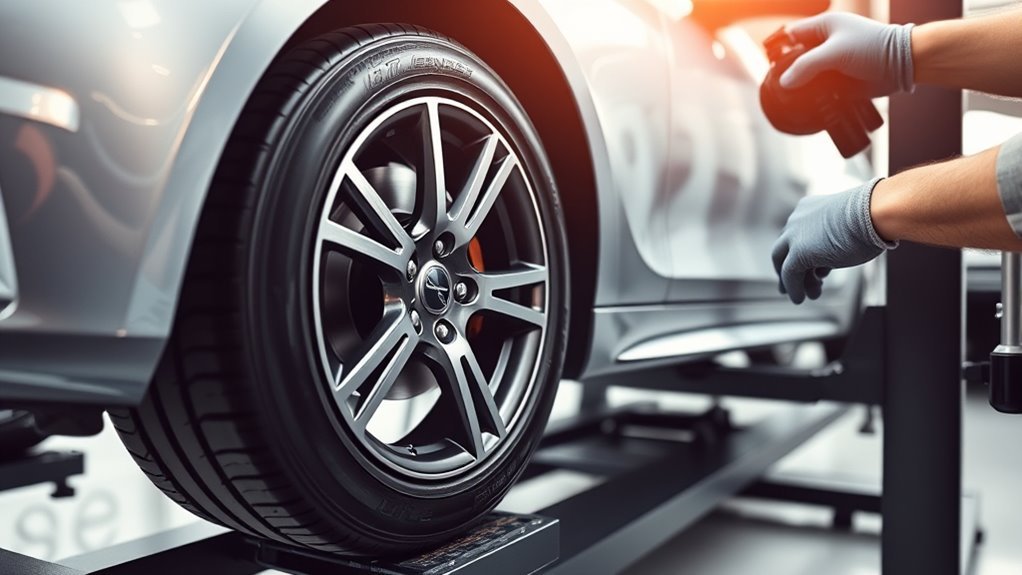
Place the vehicle on an alignment rack. Attach sensors to each wheel to measure camber, caster, and toe angles precisely. Accurate measurement is essential for correct adjustments.
3. Adjust Camber, Caster, and Toe Angles
Adjust camber (wheel tilt), caster (steering pivot angle), and toe (wheel direction) to match manufacturer specifications. Proper settings improve handling and tire wear.
4. Perform Road Test to Verify Alignment Accuracy
Drive the vehicle on a test route. Check for straight tracking, steering response, and absence of vibrations or pulling. Confirming alignment quality ensures safe and predictable vehicle behavior.
Choosing A Professional Service
Choosing a professional service for wheel alignment ensures accurate adjustments and optimal vehicle performance. A qualified shop uses trained technicians and proper equipment to align tires according to manufacturer specifications.
Reputable alignment shops employ technicians certified by organizations like ASE or receive manufacturer-specific training. Certification confirms their ability to perform precise alignment work. Customers should ask about these credentials before scheduling service.
Computerized alignment systems provide exact measurements and allow customized adjustments based on the vehicle’s design. Facilities with this technology deliver more accurate results than manual methods.
Reading customer reviews and seeking recommendations helps identify trustworthy alignment providers. Reliable shops maintain positive feedback and transparent communication.
Transparent pricing and clear explanations of the alignment process indicate professionalism. Shops that outline costs upfront and describe the work build customer confidence.
Benefits of professional wheel alignment include:
- Reduced premature tire wear
- Improved steering control
- Enhanced vehicle safety
- Better fuel efficiency
Selecting a qualified service protects your investment in new tires and maintains vehicle handling and safety.
Frequently Asked Questions
How Much Does a Typical Tire Alignment Cost?
How much does a typical tire alignment cost? A typical tire alignment costs between $75 and $100, depending on location and vehicle type. Specialized or four-wheel alignments may cost more. This service helps prevent uneven tire wear and improves vehicle handling. Overall, the cost is reasonable compared to the benefits of maintaining proper wheel alignment.
Can I Do a Tire Alignment at Home?
Can you do a tire alignment at home?
Performing a precise tire alignment at home is difficult without specialized tools and expertise. Basic adjustments might be possible, but professional alignment ensures accurate settings for camber, caster, and toe, which are essential for tire life and vehicle safety. For reliable results, it is best to use professional services.
How Long Does a Tire Alignment Take?
A tire alignment usually takes 30 minutes to one hour. The time varies based on vehicle type, alignment method, and any additional repairs needed. Two-wheel alignments are faster than four-wheel alignments. Suspension issues can extend the process. Most shops complete alignments efficiently to reduce wait times.
Does Tire Alignment Affect Fuel Efficiency?
Does tire alignment affect fuel efficiency?
Yes, tire alignment directly impacts fuel efficiency. Misaligned tires cause uneven wear and increase rolling resistance, leading to higher fuel consumption. Proper alignment ensures tires roll smoothly, reducing energy waste and improving gas mileage.
Why is proper tire alignment important?
Proper alignment minimizes tire wear and rolling resistance, which helps maintain optimal fuel economy and extends tire life.
Can small misalignments affect fuel economy?
Yes, even slight misalignments can cause noticeable decreases in fuel efficiency, making regular alignment checks important for saving fuel and money.
Are All Types of Vehicles Treated the Same for Alignment?
Not all vehicles are treated the same for alignment. Passenger cars, trucks, SUVs, performance, and off-road vehicles have different suspension designs and alignment specs. Technicians follow manufacturer guidelines and vehicle type to ensure proper handling, tire wear, and safety. Alignment procedures vary by vehicle category.